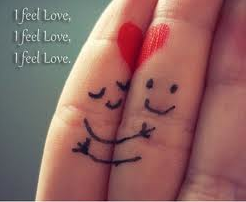
 How do you know your partner loves you? How do you know your partner feels loved?
Or perhaps you are single and think your past relationships have not worked out because you felt your partner didn’t love you enough or vice versa.
But if you do not know what actions make you feel loved then it’s pretty difficult for the other person to figure out. Nobody is Psychic, not even the love of your life 😉
Not Feeling loved is not the same as not being loved. Trouble in relationships often shows up in statements like:
“You NEVER say you love me”
“I don’t know if he/she even loves me anymore”
“You don’t appreciate me”
“I do so much for him/her and they take it for granted”
and so on…
Many of us do not realize that we each feel loved in different ways. There are many ways to show someone you love them but for each individual, there are always one or two ways that worker better than the rest.
Think of it like having a huge ring of door keys and one door. You can fumble around trying to find the one that works, or you can take the fun quiz below and save yourself and your partner a whole lot of awkward fumbling and tumbling over one another. (and I don’t mean the fun kind of tumbling and fumbling!)
The Five Love Languages Test
By Dr. Gary Chapman
There are 30 Questions in total. Each numbered question has two statements.
Read each pair of statements and circle the one that best describes you.
1. A. I like to receive notes of affirmation from you.
E. I like it when you hug me.
2. B. I like to spend one‐on‐one time with you.
D. I feel loved when you give me practical help.
3. C. I like it when you give me gifts.
B. I like taking long walks with you.
4. D. I feel loved when you do things to help me.
E. I feel loved when you hug or touch me.
5. E. I feel loved when you hold me in your arms.
C. I feel loved when I receive a gift from you.
6. B. I like to go places with you.
E. I like to hold hands with you.
7. A. I feel loved when you acknowledge me.
C. Visible symbols of love (gifts) are very important to me.
8. E. I like to sit close to you.
A. I like it when you tell me that I am attractive.
9. B. I like to spend time with you.
C. I like to receive little gifts from you.
10. D. I know you love me when you help me.
A. Your words of acceptance are important to me.
11. B. I like to be together when we do things.
A. I like the kind words you say to me.
12. E. I feel whole when we hug.
D. What you do affects me more than what you say.
13. A. I value your praise and try to avoid your criticism.
C. Several inexpensive gifts mean more to me than one large expensive gift.
14. E. I feel closer to you when you touch me.
B. I feel close when we are talking or doing something together.
15. A. I like you to compliment my achievements.
D. I know you love me when you do things for me that you don’t enjoy doing.
16. E. I like for you to touch me when you walk by.
B. I like when you listen to me sympathetically.
17. C. I really enjoy receiving gifts from you.
D. I feel loved when you help me with my home projects.
18. A. I like when you compliment my appearance.
B. I feel loved when you take the time to understand my feelings.
19. E. I feel secure when you are touching me.
D. Your acts of service make me feel loved.
20. D. I appreciate the many things you do for me.
C. I like receiving gifts that you make.
21. B. I really enjoy the feeling I get when you give me your undivided attention.
D. I really enjoy the feeling I get when you do some act of service for me.
22. C. I feel loved when you celebrate my birthday with a gift.
A. I feel loved when you celebrate my birthday with meaningful words (written or spoken.)
23. D. I feel loved when you help me out with my chores.
C. I know you are thinking of me when you give me a gift.
24. C. I appreciate it when you remember special days with a gift.
B. I appreciate it when you listen patiently and don’t interrupt me.
25. B. I enjoy extended trips with you.
D. I like to know that you are concerned enough to help me with my daily task.
26. E. Kissing me unexpectedly makes me feel loved.
C. Giving me a gift for no occasion makes me feel loved.
27. A. I like to be told that you appreciate me.
B. I like for you to look at me when we are talking.
28. C. Your gifts are always special to me.
E. I feel loved when you kiss me.
29. A. I feel loved when you tell me how much you appreciate me.
D. I feel loved when you enthusiastically do a task I have requested.
30. E. I need to be hugged by you every day.
A. I need your words of affirmation daily.
Add Total Number of Answers Here:
A. ____ Words of Affirmation B. ____ Quality Time C. ____Receiving Gifts D. ____ Acts of Service E. ____Physical Touch
Now you know where you scored highest! Stay tuned and tomorrow I’ll post the breakdown of each of the Love Languages. Then instead of hoping someone else will meet our needs we can just go ahead and ask for them.
You are Limitless and so is your Relationship!
Here is the breakdown, explaining each of the 5 Love Languages
Words of Affirmation
Actions don’t always speak louder than words. If this is your love language, unsolicited compliments mean the world to you. Hearing the words, “I love you,” are important—hearing the reasons behind that love sends your spirits skyward. Insults can leave you shattered and are not easily forgotten.*
Verbal compliments or words of appreciation are powerful communicators of love.
Encouraging words: “Encourage” means “to inspire courage”. All of us have areas in which we feel insecure. We lack courage, which often hinders us from accomplishing the positive things that we would like to do. Perhaps you or your spouse has untapped potential in one or more areas of life. That potential may be awaiting encouraging words from you or from him.
Quality Time
In the vernacular of Quality Time, nothing says, “I love you,” like full, undivided attention. Being there for this type of person is critical, but really being there—with the TV off, fork and knife down, and all chores and tasks on standby—makes your significant other feel truly special and loved. Distractions, postponed dates, or the failure to listen can be especially hurtful.*
This means giving someone your undivided attention. I don’t mean sitting on the couch watching television together. What I mean is taking a walk, just the two of you, or going out to eat and looking at each other while talking. Time is a strong communicator of love. The love language of quality time has many dialects. One of the most common is that of quality conversation – two individuals sharing their thoughts and feelings. A relationship calls for sympathetic listening with a view to understanding the other person’s desires. We must be willing to give advice, but only when it’s requested and never in a condescending manner.
Here are some practical listening tips:
Maintain eye contact when your spouse is talking.
Don’t do something else at the same time.
Listen for feelings and confirm them. Ask yourself, “What emotion is my spouse experiencing?”
Observe body language.
Refuse to interrupt. Such interruptions indicate, “I don’t care what you are saying; listen to me.”
Quality conversation also calls for self-revelation. In order for your partner to feel loved, you must reveal some of yourself, too.
Gifts
Don’t mistake this love language for materialism; the receiver of gifts thrives on the love, thoughtfulness, and effort behind the gift. If you speak this language, the perfect gift or gesture shows that you are known, you are cared for, and you are prized above whatever was sacrificed to bring the gift to you. A missed birthday, anniversary, or a hasty, thoughtless gift would be disastrous—so would the absence of everyday gestures.*
Almost everything ever written on the subject of love indicates that at the heart of love is the spirit of giving. All five love languages challenge us to give to our spouse, but for some, receiving gifts, visible symbols of love, speaks the loudest. A gift is something you can hold in your hand and say, “Look, he was thinking of me,” or, “She remembered me.” A gift is a symbol of that thought. Gifts come in all sizes, colours and shapes. Some are expensive and others are free. To the individual whose primary love language is receiving gifts, the cost will matter little.
There is also an intangible gift that can speak more loudly than something that can be held in one’s hand. Physical presence in the time of crisis is the most powerful gift you can give. Your body becomes the symbol of your love.
Acts of Service
Can vacuuming the floors really be an expression of love? Absolutely! Anything you do to ease the burden of responsibilities weighing on an “Acts of Service” person will speak volumes. The words he or she most want to hear: “Let me do that for you.” Laziness, broken commitments, and making more work for them tell speakers of this language their feelings don’t matter.*
People who speak this love language seek to please their partners by serving them; to express their love for them by doing things for them. Actions such as cooking a meal, setting a table, washing the dishes, sorting the bills, walking the dog or dealing with landlords are all acts of service. They require thought, planning, time, effort and energy. If done with a positive spirit, they are indeed expressions of love. I’m not saying become a doormat to your partner and do these things out of guilt or resentment. No person should ever be a doormat. Do these things as a lover.
Physical Touch
This language isn’t all about the bedroom. A person whose primary language is Physical Touch is, not surprisingly, very touchy. Hugs, pats on the back, holding hands, and thoughtful touches on the arm, shoulder, or face—they can all be ways to show excitement, concern, care, and love. Physical presence and accessibility are crucial, while neglect or abuse can be unforgivable and destructive.*
Holding hands, kissing, hugging and sex – all of these are lifelines for the person for whom physical touch is the primary love language. With it, they feel secure in their partner’s love. “Love touches” don’t take much time, but they do require a little thought, especially if this isn’t your primary love language or you didn’t grow up in a “touching” family. Sitting close to each other as you watch TV requires no additional time, but communicates your love loudly. Touching each other when you leave the house and when you return may involve only a brief kiss, but speaks volumes.


